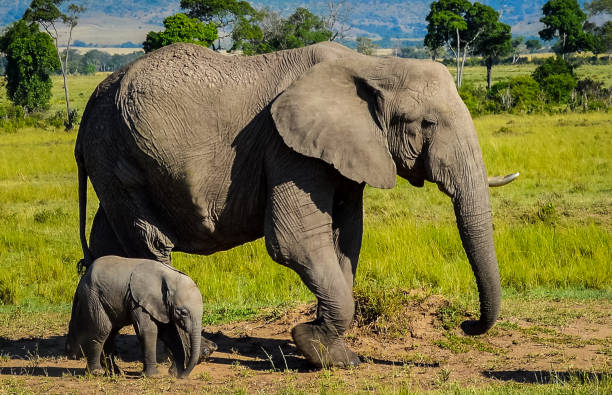
Elephants hold the record for the longest pregnancy in the entire mammal kingdom. While humans carry babies for about nine months, an elephant mother nurtures her calf for an astonishing 18 to 22 months — almost two full years. This extended period is essential for growing one of the most intelligent and physically complex babies on Earth. In this comprehensive guide, you’ll learn the exact duration, the biological reasons behind it, and everything that happens during this remarkable journey.
The Exact Length of Elephant Pregnancy
The average elephant gestation period is approximately 22 months, or roughly 95 weeks.
- African savanna elephants (Loxodonta africana): 22 months on average
- African forest elephants (Loxodonta cyclotis): slightly shorter, around 21–22 months
- Asian elephants (Elephas maximus): 18–22 months, with most births occurring at 20–21 months
Veterinary records from zoos and sanctuaries show that the longest confirmed pregnancy lasted 700 days (about 23 months), while the shortest viable birth occurred at 620 days (roughly 20.5 months).
African vs Asian Elephants: Any Difference?
Although both species have extremely long pregnancies, subtle differences exist:
- Asian elephants generally have a slightly shorter and more variable gestation (18–22 months)
- African elephants tend toward the upper end (21–23 months)
- Captive Asian elephants often give birth a few weeks earlier than their wild counterparts, possibly due to better nutrition and reduced stress
- Forest elephants, the smallest species, still require nearly two years despite their smaller body size
These variations highlight how environment, genetics, and nutrition influence gestation length even within the same family.
Why So Long? The Science Behind 22 Months
The extraordinary length serves several critical purposes:
- Brain development: A newborn elephant’s brain is already about 60–70 % of its adult size and weighs around 10–12 kg
- Massive body growth: Calves are born weighing 90–120 kg and stand over 1 meter tall at the shoulder
- Complex social learning: The prolonged pregnancy allows advanced neural connections needed for lifelong family bonds and communication
- Physical maturity: Bones, muscles, and the trunk must be fully functional from day one so the calf can keep up with the herd within hours of birth
In short, nature sacrifices speed for quality — producing the most precocial land mammal baby on the planet.
How Elephant Calves Develop in the Womb
The 22-month journey can be divided into key stages:
Months 0–6: Embryonic period
- Fertilization and implantation
- Basic organ formation begins
- The tiny embryo is smaller than a grape by month 3
Months 7–12: Fetal growth accelerates
- Trunk, ears, and legs become recognizable
- By month 10, the fetus weighs around 20–30 kg
- First movements felt by the mother
Months 13–18: Rapid weight gain
- Calf reaches 50–80 kg
- Hair begins to grow (sparse, bristly coat)
- Immune system matures
Months 19–22: Final preparation
- Calf rotates into birth position
- Lungs mature for first breath
- Weight surges to 90–120 kg
- Mother’s mammary glands swell in preparation for nursing
Comparing Gestation Periods Across Mammals
To appreciate how extreme elephants are, consider these comparisons:
- Human: 9 months
- Giraffe: 14–15 months
- Whale (sperm): 16 months
- Rhino: 15–16 months
- Walrus: 15–16 months
- Elephant: 18–22 months — the undisputed champion
No other land animal comes close.
Signs an Elephant Is About to Give Birth
Experienced herd members and keepers recognize these signals days or hours before labor:
- Restlessness and isolation from the group
- Swelling of mammary glands (“pinking up”)
- Dropping of the pelvic muscles
- Clear mucus discharge
- Frequent tail raising and urination
- “Labor walk” — slow pacing in circles
In the final 24–48 hours, other females form a protective circle around the mother-to-be.
How Elephants Protect Pregnant Females
Pregnancy is a herd effort:
- Allomothers (aunts and sisters) guard the pregnant female from predators and harassment
- The matriarch leads the group to safe birthing grounds with water and soft soil
- During drought or danger, the herd adjusts travel speed to accommodate the heavy mother
- Older females secrete calming pheromones that reduce stress hormones in the expectant mother
This communal care dramatically increases survival rates for both mother and calf.
From Mating to Birth: The Full Timeline
- Musth period: Adult bull enters heightened testosterone state
- Courtship: Bull follows and guards receptive female for several days
- Mating: Multiple brief copulations over 3–5 days
- Ovulation confirmation: LH surge detected in urine by researchers
- Implantation: Around day 30–40 after mating
- First trimester: Quiet development
- Second trimester: Visible belly growth
- Third trimester: Herd becomes protective
- Birth: Usually at night or pre-dawn, lasting 1–2 hours
- First stand: Calf stands within 30 minutes, walks within 1–2 hours
What Happens If a Calf Is Born Early?
Premature elephant calves face serious challenges:
- Underdeveloped lungs lead to breathing difficulties
- Weak trunk muscles make nursing hard
- Low body fat causes hypothermia
- Immune system immaturity increases infection risk
In the wild, calves born before 20 months rarely survive without human intervention. Zoos have successfully hand-reared premature calves using incubators, tube feeding, and 24-hour care, but the process is extremely labor-intensive.
Fun Facts About the World’s Longest Pregnancy
- An elephant mother gains roughly 20–25 % of her body weight during pregnancy
- The placenta weighs up to 60 kg — the size of a large dog
- Twins occur in only about 1 % of pregnancies and rarely both survive
- Calves are born with temporary “premilk teeth” that fall out within days
- A female elephant can be pregnant and nursing a previous calf at the same time
- The longest recorded interval between two births in the same mother is 10 years (because of the 22-month pregnancy + 3–4 years nursing)
Elephant pregnancy isn’t just long — it’s a masterpiece of evolutionary engineering that produces one of the most intelligent, social, and resilient babies on Earth. The next time you see a tiny (100 kg!) calf wobbling behind its mother, remember: that little one spent almost two full years growing inside one of the most devoted mothers nature ever created.


MOST COMMENTED
Blog
The Growth of Uploadblog.com in USA: A Go-To Platform for U.S.-Based Writers
Blog
Article Rewriter UploadArticle.com Review: Easy and Efficient Content Rewriting Solution
Blog
Easy-to-Use Sitemap Generator UploadArticle.com – Perfect for Beginners and Pros
Technology
How to Fix SSIS Error Code 469 in Your Data Integration Packages
Sports
Zeochip com (Zoechip) Review: Access, Quality, and User Risks
Education
Ronenia Meaning: Is It a Country or Just an Online Misconception?
Information
Warning: 03301246300 Linked to Housing Fraud Reports