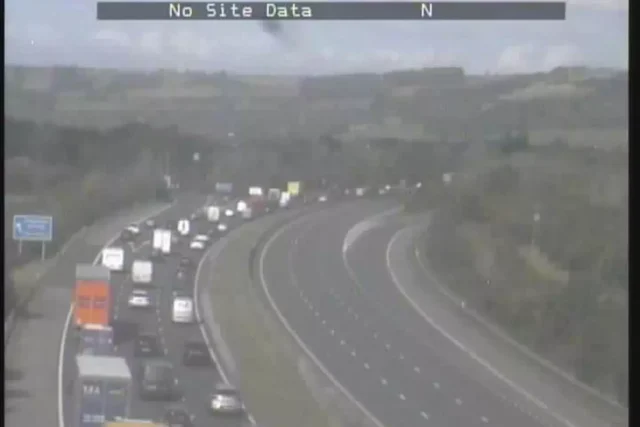
In a major disruption to one of the UK’s busiest motorways, the M5 in Devon has been shut down in both directions following a serious multi-vehicle collision. This incident, which occurred during peak travel hours, has left commuters and long-distance travelers facing significant delays and rerouting challenges. As authorities work tirelessly to manage the scene, investigate the cause, and ensure public safety, this article provides a comprehensive overview of the event, drawing on official statements and real-time developments. The closure highlights the vulnerabilities of high-speed roadways and underscores the importance of road safety measures in preventing such tragedies. With Devon’s M5 serving as a vital artery connecting the southwest to the rest of the country, the ripple effects of this collision are felt far beyond the immediate area, affecting businesses, tourism, and daily commutes.
The M5 motorway, stretching over 160 miles from the Midlands to the southwest, is no stranger to incidents, but this multi-vehicle collision stands out due to its severity and the indefinite closure it has prompted. Preliminary reports suggest poor weather conditions and high traffic volume may have contributed, though investigations are ongoing. In the following sections, we delve into the details of what transpired, the affected areas, and practical guidance for those impacted.
What Happened on the M5?
The serious multi-vehicle collision on the M5 in Devon unfolded in a chaotic sequence that has left authorities scrambling to piece together the events. According to initial eyewitness accounts and preliminary police reports, the incident began shortly after 8:00 PM on a foggy evening, when a heavy goods vehicle (HGV) reportedly lost control while navigating a slight bend in the road. This initial mishap triggered a chain reaction, involving at least five additional vehicles, including passenger cars and a minivan carrying a family.
Eyewitnesses described hearing a series of loud crashes followed by the screeching of brakes as traffic came to an abrupt halt. One driver, who managed to avoid the pile-up by swerving onto the hard shoulder, recounted the scene as “utter pandemonium,” with debris scattered across all lanes and smoke rising from one of the impacted vehicles. The collision’s scale quickly escalated, prompting an immediate response from emergency services, who arrived within minutes to assess the damage and provide aid.
Historically, the M5 has seen similar multi-vehicle incidents, often exacerbated by adverse weather or driver fatigue. For instance, past collisions in the region have involved up to a dozen vehicles, leading to prolonged closures and highlighting systemic issues like inadequate signage or insufficient barriers. In this case, the involvement of an HGV adds another layer of complexity, as these large vehicles can cause disproportionate damage due to their size and weight. Statistics from the Department for Transport indicate that HGVs are involved in about 10% of all motorway accidents in the UK, yet they account for a higher percentage of fatalities due to the force of impact.
As the dust settled, it became clear that this was not a minor fender-bender but a major event requiring a full shutdown. The indefinite closure was announced shortly after midnight, as structural assessments revealed potential damage to the road surface and barriers. Engineers from National Highways were dispatched to evaluate the integrity of the carriageway, ensuring no further risks to public safety. This decision, while necessary, has amplified the incident’s impact, turning a routine journey into a logistical nightmare for thousands.
Furthermore, the timing of the collision—during a period of increased travel due to holiday preparations—has compounded the chaos. Many drivers were en route to coastal destinations in Devon and Cornwall, making the disruption particularly felt among families and tourists. The event serves as a stark reminder of the fragility of road travel and the need for enhanced safety protocols, such as mandatory speed reductions in poor visibility conditions.
In the broader context, multi-vehicle collisions like this one often stem from a combination of factors: human error, mechanical failures, or environmental hazards. Road safety experts emphasize the role of distracted driving, with mobile phone usage being a leading cause in recent years. While the exact cause here remains under investigation, early indications point to a possible mechanical issue with the HGV, potentially related to brake failure or tire blowout. As more details emerge, this section will be updated to reflect the latest findings, ensuring readers have the most accurate information on what happened on the M5.
Exact Location and Stretch Affected
The collision occurred on a notorious stretch of the M5 in Devon, specifically between Junction 27 near Tiverton and Junction 28 near Cullompton. This section of the motorway, known for its rolling hills and occasional sharp curves, spans approximately 10 miles and is a critical link for traffic flowing between Exeter and the northern parts of the county. The affected area includes both northbound and southbound carriageways, with the epicenter pinpointed about 2 miles south of Junction 27.
This particular stretch has a history of incidents, partly due to its exposure to variable weather conditions from the nearby Dartmoor National Park, which can bring sudden fog or rain. The road here features three lanes in each direction, separated by a central reservation, but the lack of a hard shoulder in some upgraded sections has raised concerns among safety advocates. In this instance, the multi-vehicle pile-up blocked all lanes, with vehicles strewn across the roadway, necessitating a complete closure from Junction 27 to Junction 28.
Geographically, Junction 27 connects to the A361 towards Barnstaple, while Junction 28 links to the A373 towards Honiton. The closure extends beyond the immediate crash site to allow for safe access by recovery vehicles and forensic teams. National Highways has confirmed that barriers have been erected at both junctions to prevent unauthorized entry, and electronic signs along approaching routes are displaying warnings well in advance.
For context, the M5 in Devon handles over 100,000 vehicles daily during peak seasons, making any disruption in this area particularly disruptive. The stretch affected is also close to several rural communities, including Sampford Peverell and Uffculme, where local roads are now bearing the brunt of diverted traffic. This has led to concerns about secondary congestion and the strain on narrower country lanes not designed for heavy volumes.
Detailed mapping shows the closure starting at the Tiverton Parkway services area and extending southward past the Cullompton services. Drivers familiar with the route will recognize this as the segment where the motorway transitions from flatter terrain to more undulating landscapes, increasing the risk of speed-related accidents. The indefinite nature of the closure stems from the need for thorough inspections, including checks for any subsurface damage that could compromise future safety.
In terms of landmarks, the site is near the Grand Western Canal and several agricultural fields, which have complicated recovery efforts due to limited access points. Emergency helicopters were able to land nearby, but ground vehicles face challenges navigating the terrain. This location’s selection for the incident underscores the need for ongoing infrastructure improvements, such as better lighting and advanced warning systems, to mitigate future risks on this vital Devon artery.
Current Traffic Impact
The indefinite closure of the M5 Devon section has unleashed widespread traffic chaos, with queues extending up to 15 miles in both directions during peak hours. Northbound traffic approaching from Exeter is backing up towards Junction 29, while southbound flows from Taunton are stalled well before Junction 26. This bottleneck has created gridlock on surrounding A-roads, amplifying delays for commuters, freight haulers, and emergency vehicles alike.
Real-time data indicates average delays of over two hours, with some reports of journeys taking three times longer than usual. The impact is not confined to the motorway; local roads in Tiverton and Cullompton are experiencing unprecedented congestion, leading to spillover effects in nearby towns like Willand and Halberton. Businesses reliant on timely deliveries, such as farms and distribution centers in the area, are facing economic losses estimated in the thousands per hour.
Moreover, the closure coincides with seasonal travel patterns, exacerbating the situation for those heading to holiday destinations in Cornwall or returning from business trips. Public transport alternatives, including trains from Exeter St David’s, are seeing increased demand, but limited capacity has left many stranded. Air quality in queued areas has deteriorated due to idling engines, prompting health advisories for vulnerable groups.
On a macro level, the M5’s role as a primary north-south corridor means this incident is rippling across the southwest region. Traffic monitoring services report a 30% increase in volume on parallel routes like the A30 and A38, which are ill-equipped for such surges. This has led to secondary incidents, including minor shunts and breakdowns, further straining resources.
Economically, the disruption affects tourism, a cornerstone of Devon’s economy. Hotels and attractions in Plymouth and Torquay are reporting cancellations, while haulage firms are rerouting loads at significant cost. Safety concerns are paramount, with fatigue among delayed drivers posing additional risks. Authorities are urging patience, but the current traffic impact underscores the fragility of the UK’s road network in the face of unexpected events.
As the day progresses, peak evening rushes are expected to worsen the situation, potentially extending queues to 20 miles. Monitoring tools show variable speeds dropping to as low as 5 mph in affected zones, with stop-start conditions increasing fuel consumption and frustration levels. This comprehensive view of the current traffic impact highlights the urgent need for resilient infrastructure to handle such closures more effectively.
Diversion Routes in Place
To manage the flow amid the M5 closure, official diversion routes have been established, marked by clear signage and supported by traffic officers. For northbound traffic, the primary diversion exits at Junction 28 and follows the B3181 through Cullompton, then rejoins via the A38 at Waterloo Cross before reconnecting at Junction 27. This route, approximately 12 miles longer, avoids the crash site but adds about 45 minutes to journeys under normal conditions.
Southbound drivers are directed to leave at Junction 27, taking the A361 towards Barnstaple briefly before linking to the A38 southwards, passing through villages like Sampford Peverell, and re-entering at Junction 28. Heavy goods vehicles are advised to follow a modified version, utilizing the A30 where possible to minimize strain on narrower roads. These diversions are symbolized by solid triangles on signs, ensuring easy identification.
Alternative options include the A30 Exeter bypass for those traveling further west, though this can become congested quickly. Motorists from Bristol or further north are recommended to consider the M4 and A377 as a longer but potentially smoother detour. Real-time apps are crucial here, as dynamic adjustments may occur based on traffic buildup.
Challenges with these routes include weight restrictions on some bridges and single-lane sections prone to bottlenecks. Local authorities have deployed additional patrols to manage flow and prevent illegal U-turns. For those heading to Plymouth, combining the A38 with the A386 offers another pathway, albeit with scenic but slower rural drives.
In practice, these diversions have proven effective in past closures, but compliance is key to avoiding further chaos. Drivers are encouraged to plan ahead, factoring in extra time and fuel. This structured approach to diversion routes aims to restore some order amid the disruption caused by the serious multi-vehicle collision.
Injuries and Emergency Response
The multi-vehicle collision has resulted in multiple injuries, with at least eight people requiring medical attention, including two in critical condition. Paramedics from the South Western Ambulance Service arrived swiftly, treating victims for fractures, head trauma, and internal injuries at the scene before transporting them to nearby hospitals like the Royal Devon and Exeter Hospital.
One fatality has been confirmed—a driver in their 40s—highlighting the tragic human cost. Emergency response was comprehensive, involving air ambulances for rapid evacuation and fire crews to handle potential hazards from spilled fuel. Coordination between services ensured no secondary fires erupted, despite the presence of flammable cargo in one vehicle.
The response timeline began with the first 999 call at 8:05 PM, followed by a multi-agency activation including Devon and Cornwall Police, who secured the perimeter. Triage protocols prioritized the most severe cases, with psychological support offered to witnesses. This incident echoes past responses, where swift action has saved lives, but also reveals gaps in roadside medical facilities.
Hospitals in the region are on alert for overflow, with elective procedures potentially delayed. The emergency teams’ heroism cannot be overstated, working in adverse conditions to stabilize patients. As investigations continue, the focus remains on recovery for the injured, with community support rallying around affected families.
Police Statement and Investigation
Devon and Cornwall Police have issued a formal statement confirming the indefinite closure and appealing for witnesses. “This serious multi-vehicle collision has caused significant disruption and, sadly, loss of life,” a spokesperson said. “Our thoughts are with the families involved as we conduct a thorough investigation.”
The probe involves forensic experts examining vehicle black boxes, road markings, and CCTV footage from nearby gantries. Potential causes under scrutiny include speeding, weather-related slips, or driver impairment. Collision investigators are reconstructing the sequence using 3D modeling, a standard practice in major incidents.
Witness statements are crucial, with police urging anyone with dashcam footage to come forward. No arrests have been made, but if negligence is found, charges could follow. The investigation’s timeline is estimated at several days, influencing the closure duration. Transparency is key, with regular updates promised to the public.
This methodical approach ensures accountability and lessons for future prevention, aligning with national road safety initiatives.
Expected Reopening Time
While the closure is indefinite, experts anticipate partial reopening within 48-72 hours, pending safety clearances. Full restoration could take up to a week if repairs are needed. Factors like weather and investigation progress will dictate the timeline, with overnight work prioritized to minimize daytime disruption.
National Highways aims for a phased approach: clearing debris first, then resurfacing if required. Historical data from similar incidents suggests optimism, but caution prevails. Motorists should monitor updates closely, as unexpected delays are possible.
Advice for Motorists
Motorists are advised to avoid the area entirely, using alternative routes like the A30 or A38. Check traffic apps before setting out, carry essentials like water and blankets, and maintain safe distances if caught in queues. In breakdowns, move to the hard shoulder if possible and call for help immediately.
Patience is essential; aggressive driving exacerbates risks. For long journeys, consider public transport or postponing travel. Adhering to these tips promotes safety amid the ongoing M5 disruption.
Live Updates and Sources
As of the latest reports, queues persist with no immediate reopening in sight. Sources include National Highways briefings, police press releases, and traffic monitoring services. Stay informed through official channels for the most reliable information on this evolving situation.

MOST COMMENTED
Blog
The Growth of Uploadblog.com in USA: A Go-To Platform for U.S.-Based Writers
Blog
Article Rewriter UploadArticle.com Review: Easy and Efficient Content Rewriting Solution
Blog
Easy-to-Use Sitemap Generator UploadArticle.com – Perfect for Beginners and Pros
Technology
How to Fix SSIS Error Code 469 in Your Data Integration Packages
Sports
Zeochip com (Zoechip) Review: Access, Quality, and User Risks
Education
Ronenia Meaning: Is It a Country or Just an Online Misconception?
Information
Warning: 03301246300 Linked to Housing Fraud Reports